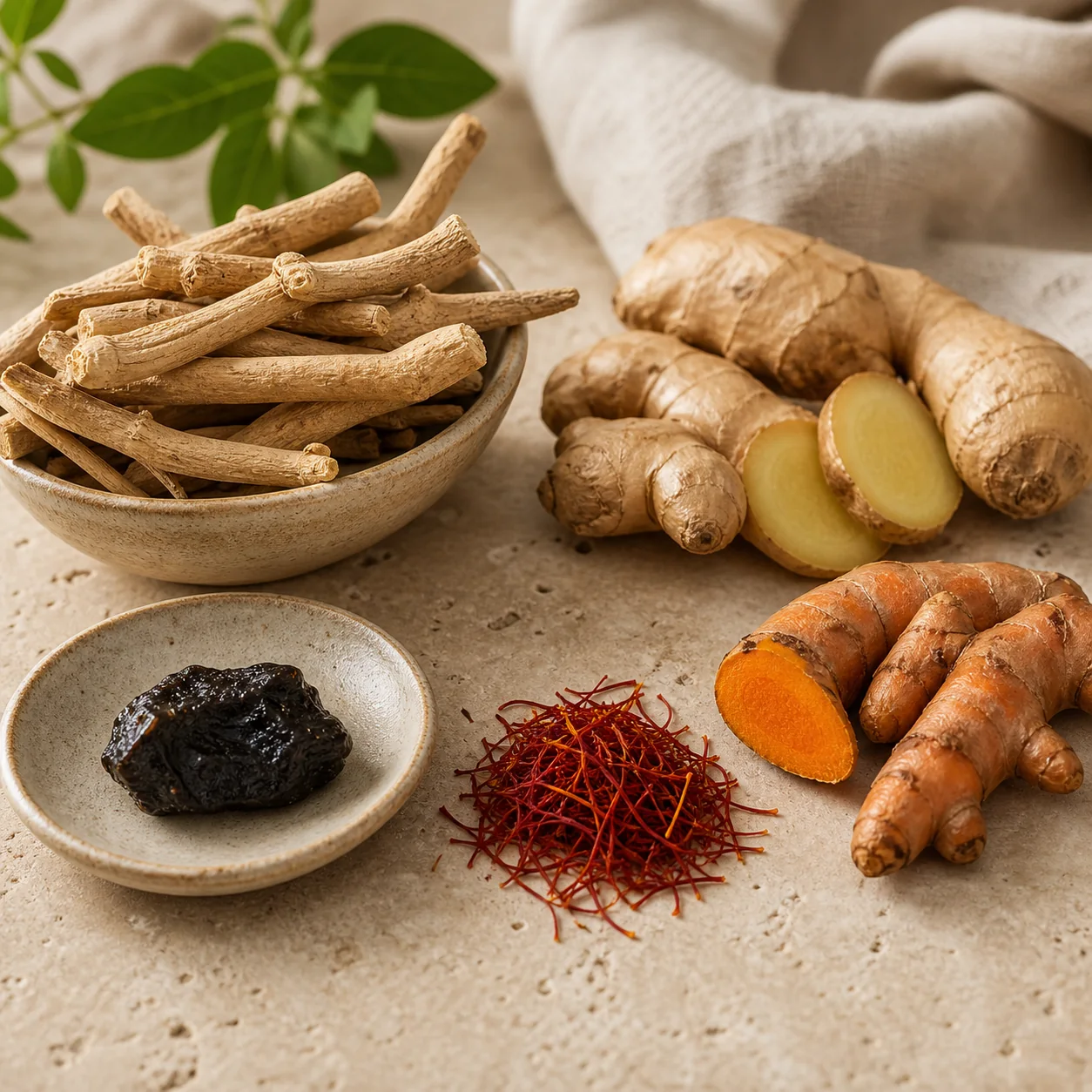
Long before supplements came in capsules and wellness became a billion dollar industry, people were already using plants, roots, spices, and natural ingredients as part of everyday life.
Now, some of those traditional ingredients are finding a new audience, particularly among people interested in energy, resilience, stress management, and longevity.
Here are five worth knowing about.
Ashwagandha
Ashwagandha has been used in Ayurvedic traditions for centuries, traditionally valued as a botanical for helping the body adapt to everyday stress.
Today, it is one of the most talked about ingredients in modern wellness.
Much of the interest centers around stress management, relaxation, sleep, and overall wellbeing. Researchers are also investigating ashwagandha in areas such as physical performance, cognitive wellbeing, and the processes involved in healthy aging.1
That makes it especially interesting in the longevity conversation.
Because longevity is not simply about adding years to your life.
It is also about supporting the resilience, energy, and wellbeing that help you make the most of those years.
And perhaps the most fascinating part?
Ashwagandha is not a newly discovered wellness trend.
It is an ancient botanical that is now being examined through a modern lens.
Shilajit
Shilajit is one of the more unusual ingredients making its way into modern wellness.
A naturally occurring substance found in mountainous regions, shilajit has a long history of traditional use in Ayurvedic practices, where it has traditionally been associated with energy, vitality, and physical resilience.
Modern interest has focused on compounds naturally present in shilajit, including fulvic acid, as researchers investigate its potential relationship with areas such as energy metabolism and overall wellbeing.2
Its traditional reputation is particularly intriguing.
For generations, shilajit has been associated with maintaining vitality and staying active, two ideas that naturally fit into the modern conversation around longevity.
It is another example of an ancient ingredient being reconsidered with modern scientific tools.
Something traditional is becoming interesting again.
Saffron
Most people know saffron as one of the world's most valuable culinary spices.
But its story goes far beyond the kitchen.
Saffron has been used traditionally across Persian, Indian, and Mediterranean cultures for generations.
Today, researchers and wellness enthusiasts are taking another look at this distinctive botanical, particularly around mood, emotional wellbeing, stress, and sleep.3
And that is what makes saffron especially interesting in the longevity conversation.
Because living longer is not the only goal.
How you feel along the way matters too.
Saffron's centuries long history combined with renewed scientific interest has made it one of the more unexpected ingredients appearing in modern wellness formulas.
Turmeric
Turmeric has been part of Indian cooking and traditional wellness practices for thousands of years.
Its bright golden colour makes it instantly recognizable, but its appeal goes beyond the spice rack.
Turmeric contains curcumin, a compound that has been extensively studied for its antioxidant activity and its role in inflammatory pathways.4
Today, turmeric is one of the clearest examples of an ancient ingredient that has successfully crossed over into modern wellness.
Thousands of years of tradition. Decades of modern research.
Ginger
Ginger might already be sitting in your kitchen.
It has been used across cultures for generations, both as a food and as part of traditional wellness practices.
Modern research has explored ginger in areas including digestive comfort and general wellbeing, helping explain why this familiar root continues to have a place in modern wellness.5
And that is part of what makes these ingredients so interesting.
They are not new.
We are simply rediscovering them.
Why Are Ancient Ingredients Coming Back?
Maybe it is because modern wellness has started asking a different question.
“What's the newest thing?”
“What has actually stood the test of time?”
And increasingly, that conversation is moving toward longevity.
Not necessarily searching for one magical ingredient that promises to make you live forever.
Instead, it is about exploring the traditional ingredients that have long been associated with vitality, resilience, energy, stress management, and overall wellbeing, while modern research continues to investigate what they may actually offer.
Traditional use does not automatically prove that an ingredient will work for everyone.
But it does make these ingredients worth exploring.
And one combination has become particularly interesting.
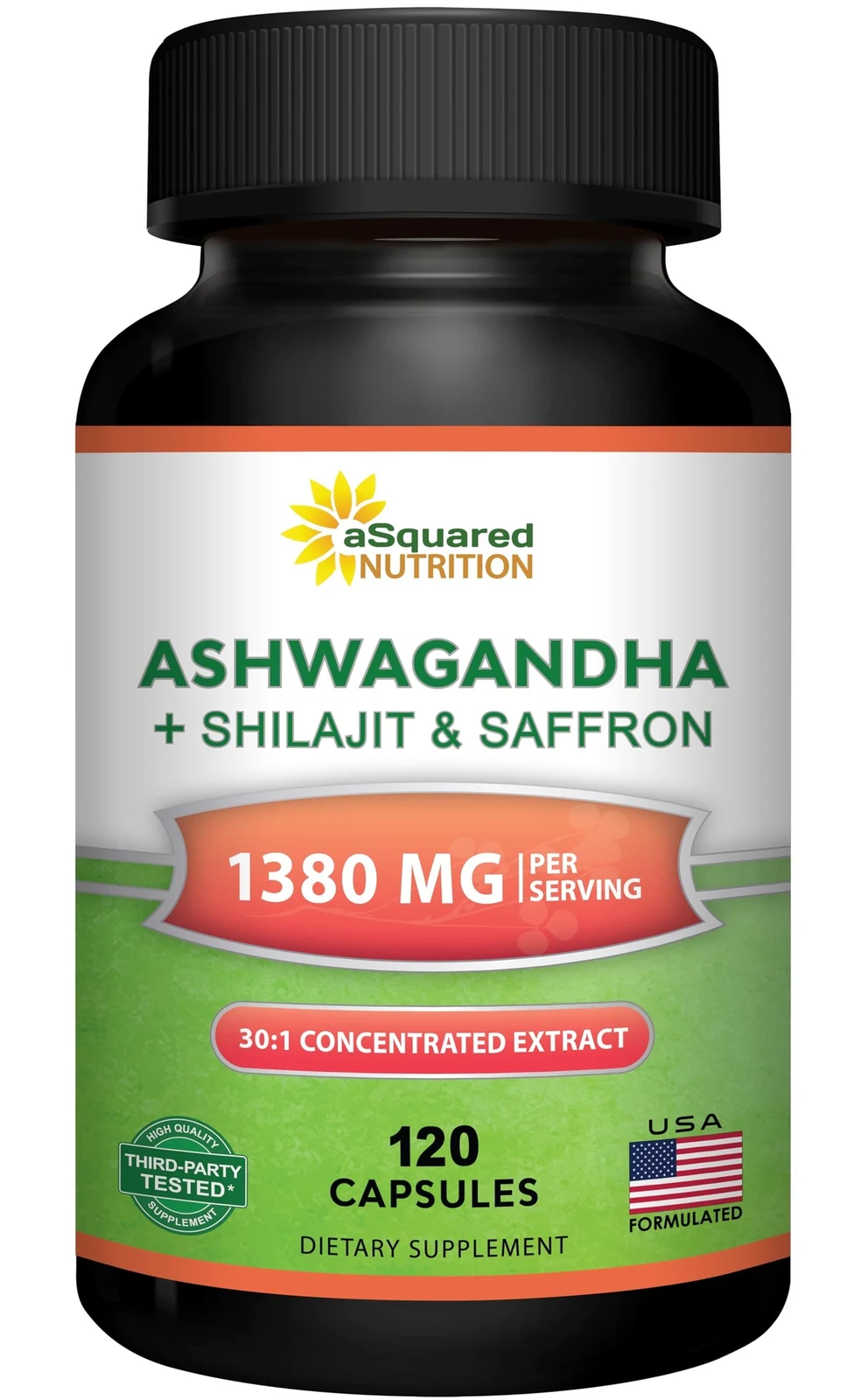
Three Traditional Ingredients. One Modern Formula.
Ashwagandha.
Shilajit.
Saffron.
Three ingredients with long histories of traditional use, now brought together in aSquared Ashwagandha.
The formula provides:6
- Ashwagandha1,200 mg
- Shilajit150 mg
- Saffron30 mg
A simple three ingredient formula built around some of the most interesting botanicals in the modern longevity conversation.
No complicated stack.
No cabinet full of different bottles.
Just two capsules a day.
Curious about the formula?
Sources
- NIH Office of Dietary Supplements: Ashwagandha
- Human research on purified, standardized shilajit
- Randomized trial of a specific saffron extract in healthy adults
- National Center for Complementary and Integrative Health: Turmeric
- National Center for Complementary and Integrative Health: Ginger
- aSquared Nutrition product page and Supplement Facts imagery
Sources support ingredient level context. They do not establish that this exact three ingredient formula has been clinically tested, or that any ingredient produces the same result for every person.
Paid advertisement for a dietary supplement. This article is for general information and is not personal medical advice. Food supplements should not be used as a substitute for a varied diet and healthy lifestyle. Individual experiences vary. Talk with a qualified health professional before using a supplement if you take medicines, have a health condition, are pregnant, or are breastfeeding. These statements have not been evaluated by the Food and Drug Administration. This product is not intended to diagnose, treat, cure, or prevent any disease.