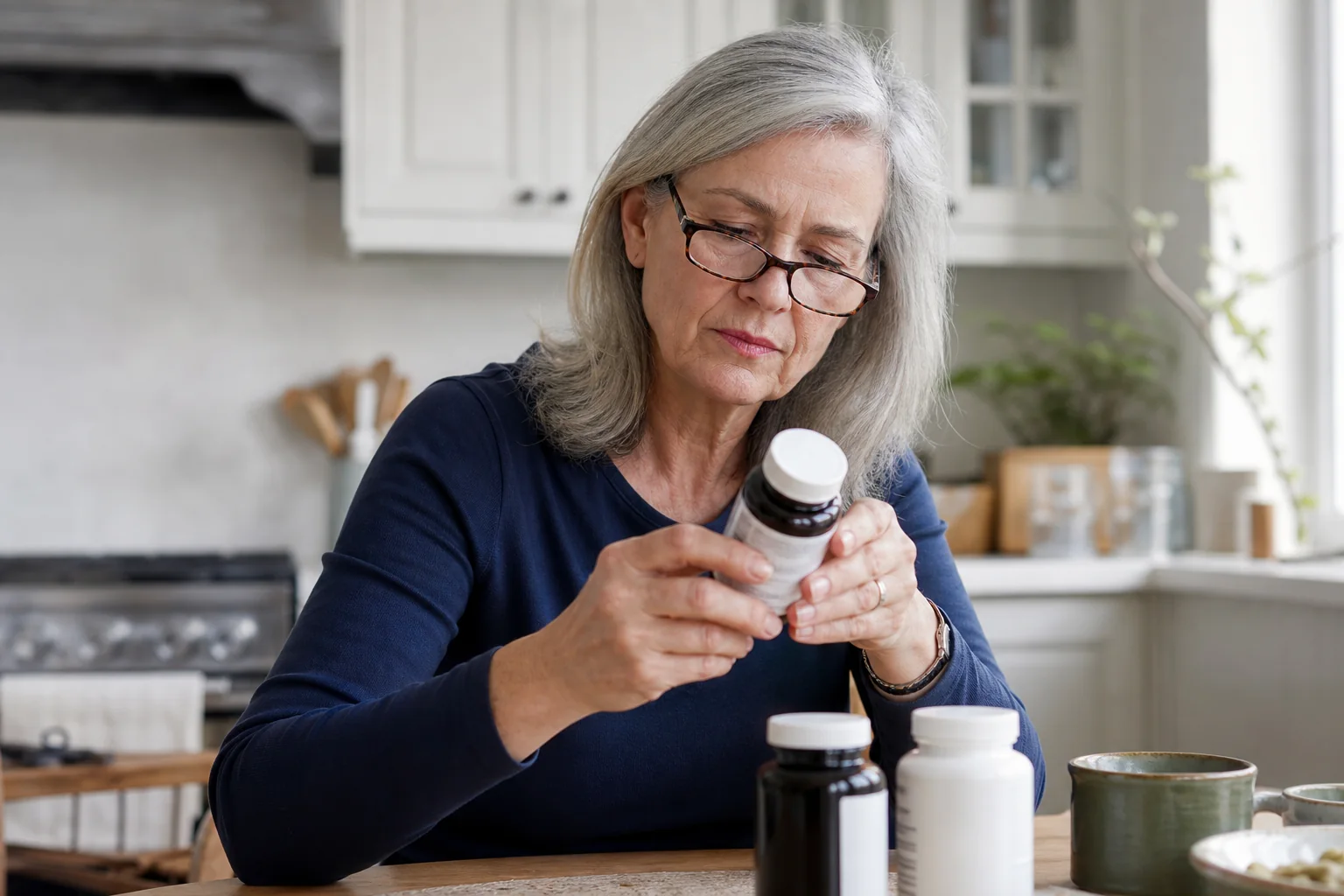
The bottle said ashwagandha.
The reviews said people felt calmer, slept better, and handled stressful days without falling apart.
You took it.
You waited.
And nothing happened.
No obvious change. No "finally" moment. Just another half-used bottle taking up space in the cabinet.
If your conclusion was, "Ashwagandha is expensive dirt," you are not irrational.
You judged the product by the experience it gave you.
But there is one problem with judging the entire category from that bottle.
Products with the same word on the front can be very different once you turn them around.
Do not judge an ashwagandha product by the biggest number alone. Check the form, extract ratio, complete formula, and product testing.
"Ashwagandha" is a category, not a complete formula
Walk through any supplement aisle and the bottles start to blur together.
One says 600 mg. Another says 1,200 mg. Another says "extra strength." One is a gummy. One is root powder. One is an extract. One combines the root and leaf.
Most shoppers do the only thing the label makes easy.
They compare the biggest number and the lowest price.
That is understandable.
It is also incomplete.
The NIH notes that studies have used different forms, preparation methods, and amounts. In plain English, one ashwagandha bottle may be very different from the next.1
That research is substantial. Two independent research teams pooled the randomized human trials on stress and sleep.
Nine randomized trials put ashwagandha to a controlled test
Compared with placebo, results favored the studied preparations on perceived stress scores and serum cortisol.
The category has real human evidence. The next question is whether the bottle in your hand resembles what researchers actually tested.
“Promising evidence for the efficacy of Ashwagandha in reducing stress … and cortisol levels.”Meta analysis authors
Five randomized trials found a small overall sleep benefit
The overall sleep effect was small but statistically significant. Stronger results appeared with insomnia, at 600 mg daily or more, and after at least eight weeks.
Ashwagandha did not act like an instant sedative. The better signal came from a consistent routine and specific studied extracts.
“Ashwagandha extract exhibited a small but significant effect on overall sleep.”Sleep meta analysis authors
One disappointing bottle does not erase hundreds of study participants. It does tell you to compare the exact extract, dose, complete formula, and routine before spending money again.
So a disappointing first try does not prove you chose badly.
It means you need a better way to compare them.
Four questions can tell you more than the biggest number on the front of the bottle.
Question 1: What form are you actually buying?
Whole root powder and an extract are not the same preparation.
An extract uses a liquid to pull useful compounds from the plant. The liquid is then removed to make a dry ingredient for capsules.2
That does not make every extract superior to every powder.
It means the form changes what the milligram number represents.
You should also ask which part of the plant is used.
Some products use root. Some use root and leaf. Human studies have used several different preparations.1
If a product borrows a research result from a specific branded extract but sells a different material, that distinction matters.
The same ingredient name does not mean the same formula.
Question 2: What does the extract ratio really mean?
A ratio like 10:1 or 30:1 looks like a strength score.
It is not that simple.
In general, a 30:1 ratio means approximately 30 units of starting botanical material were used to produce one unit of extract.
The final result still depends on the plant part, how it was processed, and the key plant compounds in the extract.3
What 30:1 actually says, and what it does not
A plant to extract ratio describes the relationship between starting botanical material and resulting extract.
30:1 describes concentration. It does not, by itself, prove purity, absorption, or effectiveness.
“Plant to Extract ratios can be misleading when their meaning is not clearly understood.”Peer reviewed botanical extract paper
A higher ratio gets attention, but the complete formula tells the real story. Look at what surrounds the ashwagandha and what job each ingredient performs.
So when a bottle says 30:1, the useful follow-up questions are:
- Which part of the plant was used?
- How was the ratio calculated?
- What other ingredients complete the formula?
- Has the finished product been tested?
Those questions are less exciting than "30 times stronger."
They are also more honest.
Question 3: What is the complete serving designed to do?
A single-ingredient product can be exactly what some people want.
But many ashwagandha buyers are not looking for one isolated outcome.
They describe feeling wired but tired. Foggy in the afternoon. Restless at night. Irritable. Flat. Too dependent on caffeine. Unable to tell whether they need energy or calm.
That is why the surrounding formula matters.
The supporting ingredients should explain the product's design. They should not be label decoration.
And each one should have a clear reason for being there.
Question 4: Can the brand prove what is in the bottle?
This is the least glamorous question and possibly the most important.
The NIH says it is difficult to determine supplement quality from the label alone.4
The front label cannot prove the bottle by itself
Quality is difficult to judge from a supplement label. Manufacturing controls and credible testing can support identity, purity, strength, and contents.
A polished label is marketing. A named lot, lab, method, and result are evidence.
“It is difficult to determine the quality of a dietary supplement product from its label.”NIH Office of Dietary Supplements
Good Manufacturing Practices set rules for identity, purity, strength, and contents. Independent testing can add another layer of confidence.
If a brand says "third-party tested," ask:
- Was the raw material tested, the finished product, or both?
- Which lot was tested?
- Which laboratory did the work?
- What was included in the testing?
- Can you see the certificate?
That is what "show your work" means in the supplement aisle.
The formula that earns a closer look
aSquared Nutrition does not ask a single herb to carry the entire formula.
It coordinates four distinct layers around what buyers are really looking for: calm, vitality, a steadier mood, and a dedicated delivery layer in one stimulant-free serving.
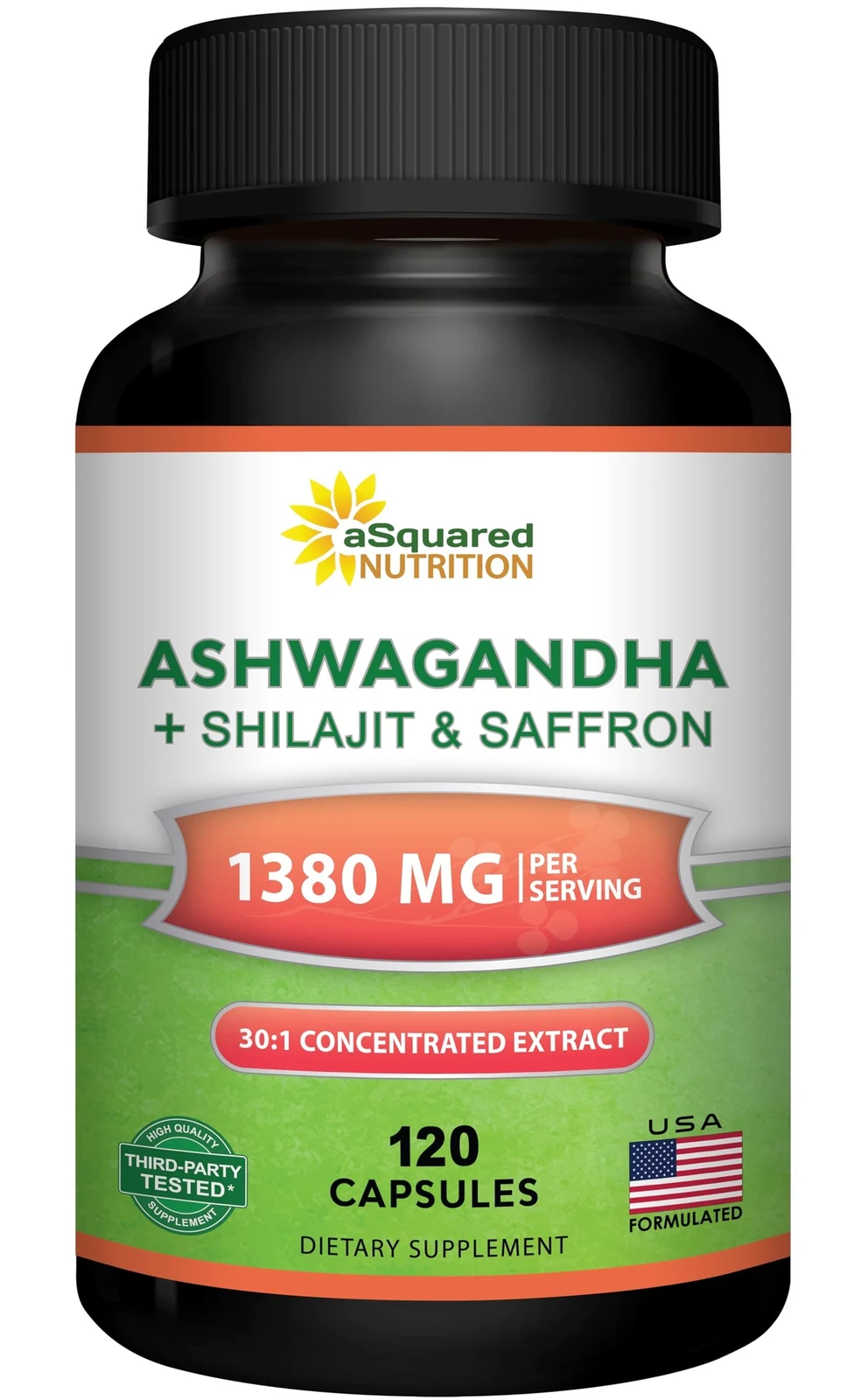
More than ashwagandha on the front label
The complete two-capsule serving gives each part of the formula a clear job.
- 1,200 mg 30:1 ashwagandha root extract
- 150 mg shilajit for the vitality layer
- 30 mg 4:1 saffron extract for the mood layer
- 60 mg Tri-Lipid Matrix for the delivery layer
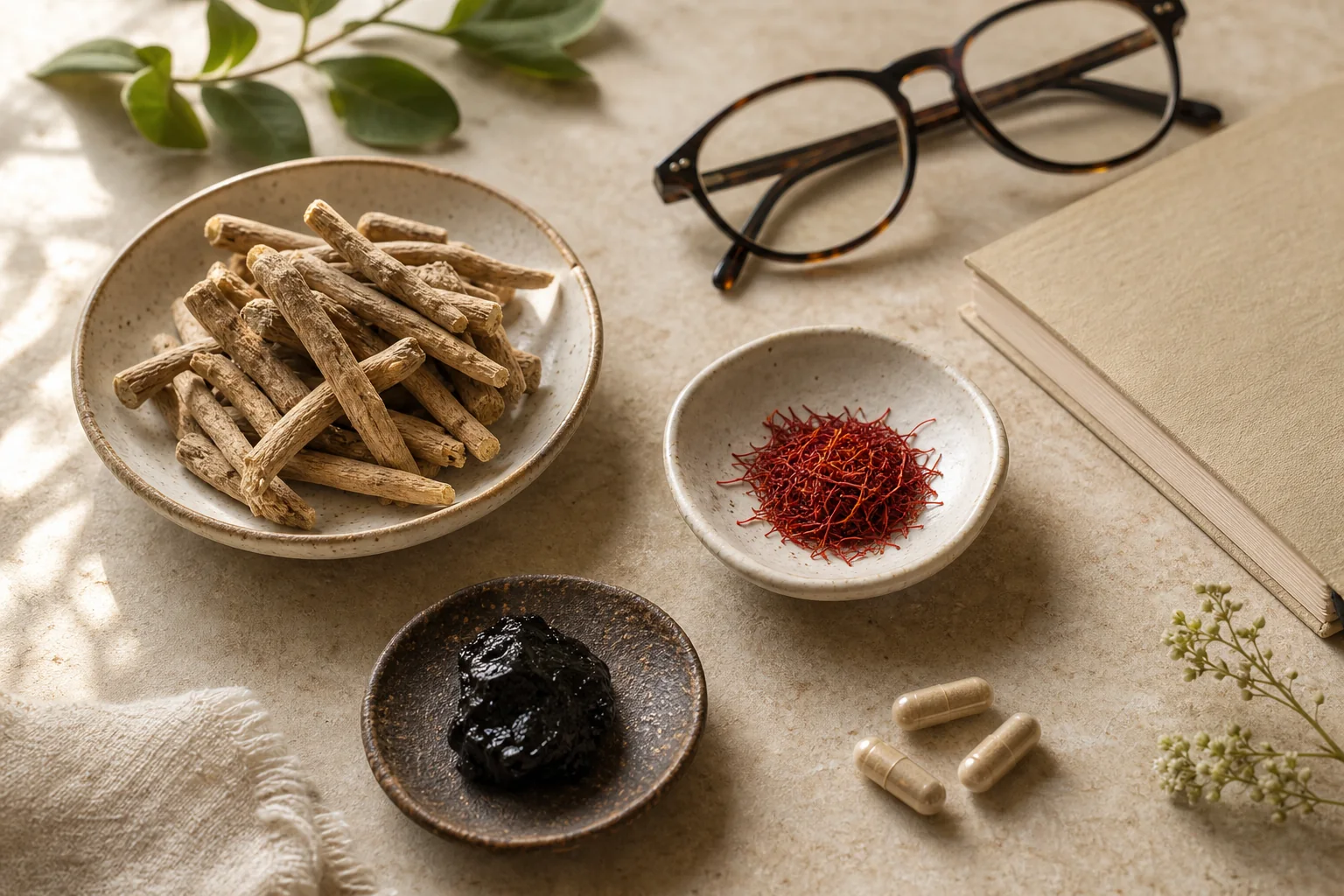
More than 30,000 Amazon customers have rated the seller
aSquared Nutrition is not a new label with no customer history. SellerRatings records 30,519 Amazon seller reviews for aSquared Brands and a 5.0 out of 5 seller rating as of July 2026.10
That is brand-level social proof across the wider catalog. It gives you something far more concrete than a vague “trusted quality” badge.
The Calm + Drive Matrix
One-herb calm formulas are a one-dimensional answer. This four-part system is built for people who still want to feel clear, motivated, and capable during the day.
Ashwagandha: the calm foundation
The serving starts with 1,200 mg of 30:1 ashwagandha root extract. Ashwagandha is the ingredient with the deepest human evidence in this formula, including randomized trials on stress, cortisol, and sleep measures.89
Proof level: the strongest human evidence in the formula. The studies used specific preparations, so this supports the ingredient rationale rather than guaranteeing an identical product result.
Shilajit: the vitality layer
The serving adds 150 mg of shilajit, standardized to at least 50% fulvic acid. Purified, standardized shilajit has been studied in a randomized human trial, which gives the ingredient a real research rationale instead of a fashionable name alone.6
The published strength after fatigue signal was mainly seen at 500 mg daily. This product declares 150 mg, so the study proves human research exists for standardized shilajit, not that this serving duplicates that result.
Saffron: the mood layer
The serving includes 30 mg of 4:1 saffron extract. One randomized, double-blind trial studied 30 mg of a specific standardized saffron extract in 56 healthy adults for eight weeks, giving researchers a credible reason to keep studying saffron in the stress and mood conversation.11
The study gives saffron a credible ingredient rationale. It used a specific standardized extract, so it should not be treated as a finished product trial.
Tri-Lipid Matrix: the delivery layer
MCT oil powder, phosphatidylcholine, and alpha-GPC complete the declared 60 mg Tri-Lipid Matrix. This creates a defined fourth layer instead of another long list of unexplained herbs.
What the label proves: the blend composition and amount. No finished product absorption study was supplied, so this page does not turn “delivery layer” into a clinical absorption promise.
This is the key difference: calm and capability are treated as two sides of the same goal, not competing choices.
Why your first bottle does not settle the question
Your first product had its own form, amount, and supporting formula. A one-note bottle asks ashwagandha to do everything.
That is why the Four-Question Label Test matters.
It helps you compare the complete design instead of buying the next bottle for the same weak reasons.
Why one bottle gives you a fairer 60-day test
Each bottle contains 120 capsules. At two capsules daily, it provides 60 servings.
That 60-day window is not arbitrary. The NIH evidence summary describes many ashwagandha trials lasting six to eight weeks, while the sleep meta-analysis found more pronounced results after at least eight weeks.19
That creates a natural evaluation window.
Judge the pattern across ordinary weeks, not one unusually good or bad Tuesday.
Track it.
Keep caffeine, bedtime, and other major variables visible. Note unwanted effects. Do not change five supplements at once and expect to know which one mattered.
This simple routine gives you a much cleaner way to judge whether the Calm + Drive Matrix belongs in your day.
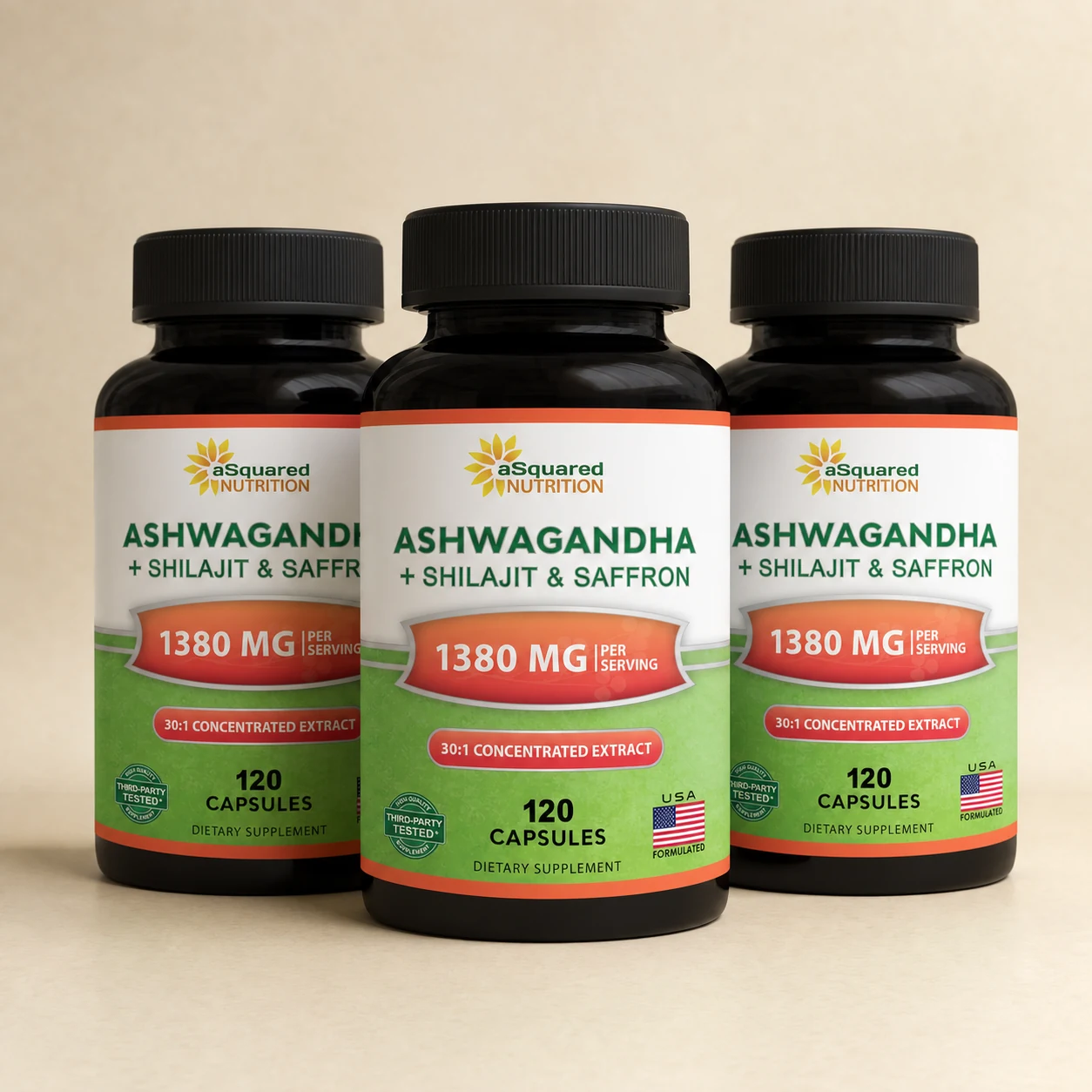
The Six-Month Consistency Bundle
For readers who want the best value and fewer reorder decisions, the reader-exclusive offer is three bottles. That puts approximately 180 daily servings on hand and avoids two future reorders.
- Three bottles, 360 capsules total
- Approximately 180 daily servings at two capsules daily
- Two future reorder decisions avoided
- Free standard shipping included
- 30-day money-back guarantee
The three-bottle bundle saves $19.90 against three single bottles, lowers the cost per day, and removes the need to reorder every 60 days.
Use the first bottle as your initial evaluation window. If you decide to continue, the next bottles are already there. If the bundle later sells through, you will not need to interrupt the routine or buy the remaining bottles separately.
The bottom line
Your first ashwagandha bottle did nothing for you. That does not make every formula identical.
Turn the next bottle around.
Ask about the form. Ask what the ratio means. Look at the complete serving. Then ask the brand to prove what is in it.
Then compare that one-note bottle with a formula built around four coordinated jobs.
Sources
- NIH Office of Dietary Supplements: Ashwagandha
- NIH Botanical Dietary Supplements Background
- Understanding plant-to-extract ratios
- NIH Dietary Supplements Background Information
- NIH: Dietary Supplements, What You Need to Know
- The Effects of Shilajit Supplementation on Fatigue-Induced Decreases in Muscular Strength
- Effect of Saffron Extract Supplementation on Mood in Healthy Adults
- Effects of Ashwagandha on Stress and Anxiety: A Systematic Review and Meta-Analysis of Nine Randomized Trials
- Effect of Ashwagandha Extract on Sleep: A Systematic Review and Meta-Analysis of Five Randomized Trials
- aSquared Brands Amazon Seller Rating and Review Count
- Effects of Saffron Extract Supplementation on Mood, Well-Being, and Response to a Psychosocial Stressor
- aSquared Nutrition Current Product and Bundle Catalog
Paid advertisement for a dietary supplement. It is not personal medical advice. These statements have not been evaluated by the Food and Drug Administration. This product is not intended to diagnose, treat, cure, or prevent any disease.